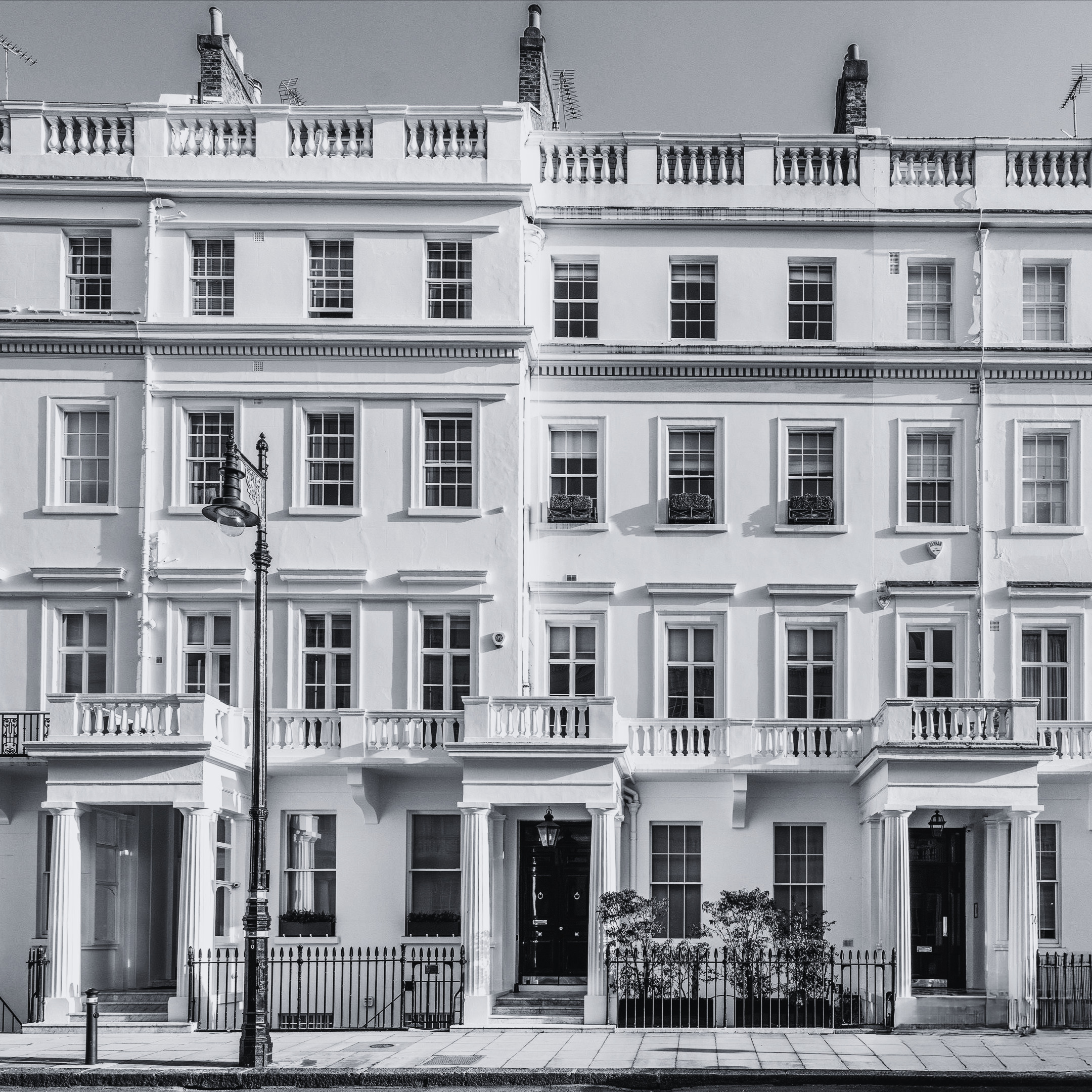
Mortgages for properties with land and acreage work differently to the mortgages most people are used to — and that difference tends to surface at exactly the wrong moment. There’s a particular point in a lot of our clients’ lives — often a few years after Battersea or Clapham has done its job — when a garden stops feeling like enough. What follows is usually a Rightmove search that starts in Surrey and drifts, over a few months, into Hampshire, then the Cotswolds. And somewhere around the third viewing, someone mentions how many acres come with the house, and the conversation changes shape.
It’s worth having that conversation with a broker before you have it with a valuer. The mortgage market treats land very differently from the way estate agents describe it — and it’s a different conversation again from the one we usually have with clients still buying in Battersea or Clapham.
Why acreage changes the mortgage, not just the price
A high street lender’s systems are built around a fairly narrow idea of a residential property: a house, a reasonable garden, comparable sales nearby. Land beyond that starts to look, to an underwriter, less like part of the home and more like a separate asset with its own risk profile — harder to value, harder to resell, and occasionally carrying uses (grazing, stabling, an outbuilding let to someone) that edge the case out of standard residential lending altogether.
So the question isn’t really “will a lender consider land.” Most will, up to a point. The real questions are how much of that land the lender is prepared to value at all, what they assume you’re doing with it, and whether their appetite matches the deposit you were planning to put down.
How lenders tend to think about acreage
There’s no single industry rule — every lender sets its own threshold, and those thresholds move — but a pattern holds across most of the market:
Up to two or three acres rarely raises an eyebrow. Most mainstream lenders treat this as an extended garden and value it as part of the property, much as they would a standard residential purchase.
Three to ten acres is still workable with a good number of high street and building society lenders, though it typically moves the case into manual underwriting rather than automated approval, and the lender will want reassurance that the land is private and non-commercial.
Beyond ten acres, the lender pool narrows meaningfully. Some mainstream lenders will still look at these cases individually, often at a lower loan-to-value, but this is increasingly specialist lender or private bank territory.
Fifty acres and beyond — country estates, smallholdings, working land — sits almost entirely with specialist and private bank lenders, who assess the whole picture: the house, the land, its use, and often the borrower’s wider financial position, rather than applying a standard residential formula.
The detail that catches people out isn’t the acreage number itself, though — it’s what the lender actually agrees to value. Several lenders will only price in the house plus an acre or so of garden, regardless of how much land the title includes. If a fourteen-acre property is being sold on the strength of its grounds, and the lender is only prepared to lend against one of those acres, the gap between what you offered and what the mortgage will actually support can be significant. That’s a conversation worth having before an offer goes in, not after a valuation comes back short.
What lenders assess on mortgages for properties with land and acreage
Acreage is the first filter. Underneath it, a handful of things do most of the work in deciding which lenders are realistic:
How the land is used. Land that simply extends the home — paddocks for your own horses, woodland you walk through rather than manage, a tennis court, a swimming pool — is the straightforward case. Anything that generates income, even modestly (grazing let to a neighbour, a holiday cottage on site, a wedding barn), tends to move the whole property towards commercial or semi-commercial lending, which is a different product with a different set of lenders.
Outbuildings. Stables, barns, annexes, or a second dwelling on the land all affect appetite, and occasionally require their own valuation treatment.
Title. Lenders generally want the land under the same legal title as the house, without separate access arrangements or restrictive covenants that would complicate matters if they ever needed to repossess and sell.
Valuation risk. Comparable evidence thins out quickly once you’re looking at a farmhouse with twenty acres rather than a terrace on a known street. Valuers may need to visit in person, and in more rural locations, a cautious valuation isn’t unusual — another reason to have a sense of the likely number before you commit to a price.
Agricultural ties. A property with an Agricultural Occupancy Condition — restricting who can live there to those working in agriculture or forestry — is valued at a real discount to the open market, often 25–40% below a comparable unrestricted property, because the pool of eligible buyers (and therefore future buyers) is so much smaller. Some lenders won’t touch these at all; others will, with the right evidence of a qualifying occupation.
Flood risk. Rural sites often mix insurable and less insurable elements — the house may sit comfortably outside a flood zone while a stable block or barn doesn’t, and agricultural buildings generally fall outside the Flood Re scheme that backstops residential cover. A lender won’t complete without buildings insurance in place, so this is worth checking early rather than at the eleventh hour.
Equestrian and land-income cases
A lot of our SW London clients moving into Surrey or the Sussex borders are doing so partly for the riding. Private equestrian use — your own horses, your own paddocks — is generally treated as part of a standard residential case by lenders and private banks with rural experience. It’s when the yard starts working commercially — livery for other owners, a riding school, boarding — that the case shifts towards agricultural or semi-commercial finance, with a different (and shorter) list of willing lenders.
The same logic applies more broadly to any income the land produces: rent from a Farm Business Tenancy, a let cottage, grazing income. It can support affordability in the right circumstances, but it typically needs several years of evidence and a lender comfortable assessing rural income specifically — not every underwriter is.
Buying land without a house already on it
Everything above assumes there’s a property attached. Buying bare land is a different exercise altogether, and tends to fall under specialist finance rather than a standard residential product:
- Self-build mortgages release funds in stages as building work progresses, rather than as one lump sum — the usual route if the plan is to build.
- Commercial land mortgages apply where the land is intended for development, farming, or investment rather than a private home.
Both tend to ask for a larger deposit than a standard residential purchase — often 25–50% — and lenders will generally want to see planning permission, or at least a credible route to it, before committing.
Remortgaging once you already own the land
The same criteria apply on a remortgage, and the deciding factor is usually whether the use of the land has changed since the original mortgage was arranged. If it’s still purely residential, moving to a new deal is generally straightforward. If you’ve since started earning from it — letting grazing, running something from an outbuilding — your existing lender may no longer be the right fit, and a switch to a commercial or semi-commercial product may be needed. It works in reverse too: if a property was bought on a commercial basis and the land is now purely residential, it’s worth checking whether a standard remortgage would now get a better rate.
The practical order of operations
For anyone at the stage of viewing properties with land rather than just browsing them, the sequence that tends to work best is:
- Get precise on the acreage, current use, outbuildings, and title before falling in love with a particular property.
- Have a realistic sense of how a lender is likely to value the land — not just the house — before deciding what to offer.
- Approach the right lender first, rather than the most familiar one. Given how differently criteria vary across the market, the wrong first application can cost weeks and a hard credit search for nothing.
- Prepare documentation early, particularly if there’s any income attached to the land.
- Go into the valuation with your eyes open about how the land is likely to be treated, so a low figure doesn’t arrive as a surprise near completion.
A few questions we’re asked often
Is there a maximum acreage for a mortgage?
No fixed industry limit — it varies by lender. Most mainstream lenders are comfortable somewhere between two and ten acres; beyond that, specialist and private bank lenders tend to be the more realistic route, though a handful of lenders have no stated cap at all for purely residential use.
Will the lender value all of my land?
Not necessarily. Some cap what they’ll price in at the house plus a set amount of garden, regardless of the title’s full acreage — which can materially affect how much you’re able to borrow against a given asking price.
Do I need a different mortgage for horses on the land?
Usually not, if it’s your own horses and no income is involved. It’s commercial equestrian use — livery, a riding school — that shifts the case towards agricultural or semi-commercial lending.
Can I get a mortgage on a smallholding or working farm?
Yes, though it typically calls for an agricultural or commercial mortgage rather than a standard residential one, with the lender assessing any income the land or business generates.
Should I involve a broker before making an offer, not after?
Given how much acreage, land use and outbuildings shift the available lender list, most buyers find it’s worth having someone map the likely valuation and lender fit before they commit to a price — rather than discovering the gap once a survey’s already been instructed.
Every lender’s approach to acreage, land use and valuation shifts more often than most people expect, and it’s rarely the acreage number alone that decides what’s realistic. Because mortgages for properties with land and acreage are assessed so differently from a standard purchase, if you’re weighing up a move that comes with real land attached, it’s worth talking it through before you offer.