

For a homeowner who needs to raise £50,000, one possible route is a second charge mortgage rather than replacing a first mortgage that already suits them. That can add secured borrowing against the same property while leaving the existing loan in place. The useful comparison is therefore not simply “can I borrow?”, but what happens to the first mortgage, the new debt and the total cost.
The latest published FLA figures underline why that comparison matters. June 2026 recorded £205 million of new second-charge lending across 3,828 agreements, with loan consolidation accounting for at least 60% of new business. Before adding secured debt, our article on the questions worth asking before you borrow more is a useful starting point for separating the need for money from the method used to raise it.
How Does a Second Charge Mortgage Work?
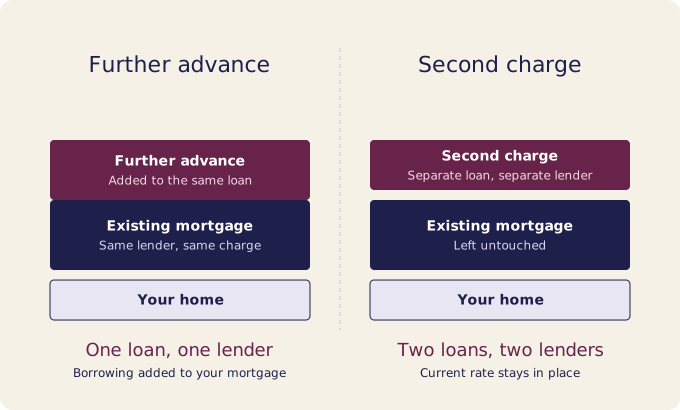
It works by placing another secured loan against a property that already has a mortgage. The original lender keeps the earlier charge, while the later lender ranks behind it. The first mortgage normally remains in place and the additional loan has its own payment, rate, term and conditions.
Under FCA guidance, a regulated mortgage contract can be secured by a first, second or subsequent mortgage. For example, if a home were worth £600,000, with a £300,000 first mortgage and £75,000 of additional secured borrowing, total secured debt would be £375,000, or 62.5% of the property value. That is a hypothetical illustration, not an indication of what a lender would offer.
When Can a Second Charge Mortgage Make Sense?
It can be relevant when preserving the existing first mortgage has a measurable value and the extra borrowing remains affordable. Someone part-way through a fixed deal may otherwise face an early repayment charge or have to reprice the whole first-mortgage balance simply to raise a smaller additional amount.
For a borrower comparing routes, a further advance, remortgage, separate secured loan or unsecured borrowing can produce very different costs. Our guide to product transfers and new-lender comparisons explains why the existing deal and the replacement deal need to be costed side by side rather than judged on one headline rate.
| Route | First mortgage | New borrowing | Main cost test |
|---|---|---|---|
| Second charge | Usually remains in place | Separate secured loan | Rate, fees, term and combined debt |
| Further advance | Stays with current lender | Added by existing lender | Advance terms and combined cost |
| Remortgage | Replaced | Usually combined into one loan | Early repayment charge, rate, fees |
| Unsecured loan | Unaffected | Not secured on the property | Rate, term, amount and monthly cost |
What Does a Second Charge Mortgage Cost?
The cost is wider than the interest rate. Depending on the arrangement, there can be intermediary and lender fees alongside valuation or legal costs, so we compare the total cost over the expected period of borrowing rather than the monthly payment in isolation.
The FCA’s March 2026 review found intermediary fees ranging from 2.5% to 15% of the loan amount among the firms it reviewed, with the majority charging between 10% and 12.5%, in addition to lender fees. That does not describe every firm or case, but it makes fee comparison a material part of assessing the borrowing.
How Is a Second Charge Mortgage Assessed?
Assessment starts with affordability, not simply the equity in the property. FCA rules require lenders to consider ability to pay, and a second-charge lender must also take account of relevant existing mortgage borrowing and likely future interest-rate changes when assessing the combined commitment.
For a household with childcare, loans or variable income, accurate expenditure can materially change the result. The FCA’s 2026 review found examples where some expenditure assessments did not adequately reflect costs such as childcare, household goods and repairs. We therefore treat bank statements, debt balances and regular commitments as part of the case, not as paperwork added at the end.
What Happens During the Application?
The process normally moves from comparing routes to gathering evidence, underwriting the case and completing any valuation and legal work that applies. The lender will consider the property, existing secured borrowing, income, expenditure and its own criteria before deciding whether the proposed loan is affordable.
For homeowners working to a deadline, completion time remains case-specific because underwriting questions, valuation and legal or consent requirements can vary. In England and Wales, a new legal charge can be registered at HM Land Registry, and registered charges normally rank in the order entered on the title. Our guide to the stages that influence remortgage timescales gives useful context on why property finance rarely moves at one fixed speed.
What Are the Main Alternatives?
The main alternatives can include a further advance from the existing lender, a full remortgage or unsecured borrowing. FCA rules specifically require firms dealing with increased secured borrowing to make customers aware that alternative finance options may be available, including a further advance and different first- or second-charge structures where relevant.
For someone with a valuable existing mortgage deal, preserving it may matter more than simplifying everything into one account. For someone close to the end of a deal, replacing the whole mortgage can produce a different cost picture. Neither route wins automatically; the existing balance, required amount, fees, term and household circumstances all affect the comparison.
What Needs Extra Care With Debt Consolidation?
Debt consolidation needs extra care because a lower monthly payment can result from repaying the debt over longer or from turning unsecured borrowing into debt secured against the home. The FCA requires advisers, where relevant, to consider the cost of extending the repayment period and whether it is appropriate to secure previously unsecured debt.
The latest FLA data shows how central consolidation is to this market, accounting for at least 60% of new business in June 2026. Where repeated borrowing reflects wider cash-flow pressure, changing the debt structure does not by itself address that cause. For cases requiring a broader review of security and lender criteria, our specialist finance service explains the wider area we work in.
In Summary
A second charge mortgage can raise capital without replacing the first mortgage, but preserving an existing deal has to be weighed against the new rate, fees, term, affordability and the risk created by securing more debt against the property. Equity may make a structure possible; it does not establish that the borrowing is suitable.
For any homeowner comparing routes, we would look beyond whether a lender can provide the money. Total cost, the treatment of the existing mortgage, the length of the new debt and the effect on household finances are what make the comparison meaningful.
Frequently Asked Questions
Can I Get a Second Charge Mortgage Without Changing My First Mortgage?
Yes. A second charge mortgage normally sits alongside the existing first mortgage rather than replacing it. The additional borrowing has its own terms and payment while the first loan remains in place, subject to the relevant lender requirements.
How Much Equity Do I Need for a Second Charge?
There is no single market-wide equity requirement. Lenders can assess property value, the first-mortgage balance, the requested borrowing, affordability and their own maximum combined loan-to-value criteria before deciding what is available.
Is a Second Charge the Same as a Further Advance?
No. A further advance is additional borrowing from the existing mortgage lender, while a second charge is a separate secured loan ranking behind the first charge. The rates, fees and underwriting can therefore differ.
Is a Second Charge Cheaper Than Remortgaging?
Not automatically. Keeping the first mortgage may avoid replacing the whole balance or triggering an early repayment charge, while the separate loan can have its own rate and fees. Total cost is more useful than comparing one headline rate.
Can I Use a Second Charge to Consolidate Debt?
Yes, debt consolidation is a common use of this type of lending. It can also turn unsecured debt into borrowing secured against the home, so the term, total cost and reasons for the existing debts need careful consideration.
Could My Home Be Repossessed if I Miss Payments?
Potentially, yes, because the borrowing is secured against the property. If secured payments are not maintained, the home can ultimately be at risk, with registered charges having a priority order over sale proceeds.
Will the Lender Check My Income and Spending?
For regulated cases, affordability assessment is central to the lending decision. Lenders consider income and expenditure and can use evidence such as bank statements alongside existing credit commitments and secured-mortgage payments.
Do I Need Legal Work for a Second Charge?
Legal and registration work can apply because another charge is being created over the property. The exact process depends on the lender, title and jurisdiction, so the acting solicitor or conveyancer should confirm the legal requirements for the individual case.






